
How do you find a research gap?
When looking for a thesis topic or a project question, the real task is to see what the literature has not studied. This guide covers what a gap is, its types, how to search for one, and how to document it.
What is a research gap?
It appears as missing evidence, an untried method, an uncovered group, or findings that do not agree with each other. Looking for a gap does not start with reading, it starts with recording what you read in an organised way.
What you do not know is your own knowledge gap, and it closes by reading. What the field has not yet answered is a gap; what it cannot answer at all is a limit, staying open because data or approval is missing.
Webster and Watson (2002) propose organising a review around concepts rather than articles: when studies measuring the same concept are placed side by side, the missing cell becomes visible.
Is every gap worth researching?
No, a topic being unstudied does not make it worth studying. A worthwhile gap is one that is answerable and, once answered, changes a decision, a practice, or a theory.
The first question to ask when you encounter a gap is: why is this topic empty? The answer falls into three main sets, and the decision differs for each.
| Reason | Symptom | Decision |
|---|---|---|
| Its turn has not come yet | Neighbouring topics have been studied, the field is growing, a new data source has opened up | Pursue it |
| It cannot be studied | Data is not accessible, no measurement tool exists, ethics board approval cannot be obtained | Solve the obstacle first, otherwise give up |
| It is meaningless | Whatever the result, it affects no decision or theory | Leave it |
The third row is the one most often skipped; nobody having asked a question is usually not a coincidence. When defending a gap, saying "there is no study on this" is not enough, you also need to say what would change if there were.
What types of gap are there?
Gaps fall into six types: evidence, theory, method, population, context and conflicting finding. Identifying the type is half the work, because each type calls for a different research design.
Evidence gap
There are not enough studies of sufficient quality on a relationship or an effect; the results rest on a single study, a small sample, or a weak design. The solution is to collect new primary data, or to systematically bring together the existing evidence.
Theory gap
Findings exist but there is no explanation that connects them, or the existing theory falls short of explaining new findings. This gap closes not with new data but by rebuilding the conceptual framework.
Method gap
The question has been asked, but always studied with the same method, and that method's limits are shaping the result. Measuring the same construct with a different method and testing whether the results converge is the classic solution to this gap (Campbell and Fiske, 1959).
Population gap
Findings were obtained from a specific group and whether they generalise to other groups is not known; a defined subset (age, occupation, sector) may never have appeared in the literature. The solution is to study the same question again in the uncovered group.
Context gap
Studies were carried out in a specific country, sector, culture, or time period, and the direction or strength of a relationship can change when the context changes. This gap is not defended just by saying "a Turkey case"; why the context is expected to change the result must be justified.
Conflicting finding gap
Different studies have given different answers to the same question; the source of the conflict can be sample, measurement, analysis, or context differences. This type is the most productive gap for studies that bring the evidence together and test where the difference comes from, because the field's interest in the question is already proven.
How do I search the literature?
The search runs in three stages, and is not complete until all three are done (Webster and Watson, 2002).
These three stages are not enough on their own; what the search is looking for has to be written down beforehand. Cooper (1988) proposes defining a review along its focus, goal, perspective, coverage, organisation and audience.
- Core set: studies published in the field's main journals in recent years that address the topic directly.
- Backward tracking: recurring titles in the core studies' reference lists. Everyone going back to the same source shows that source is foundational to the field.
- Forward tracking: new articles that cite the core studies. Only this step shows where the field is heading.
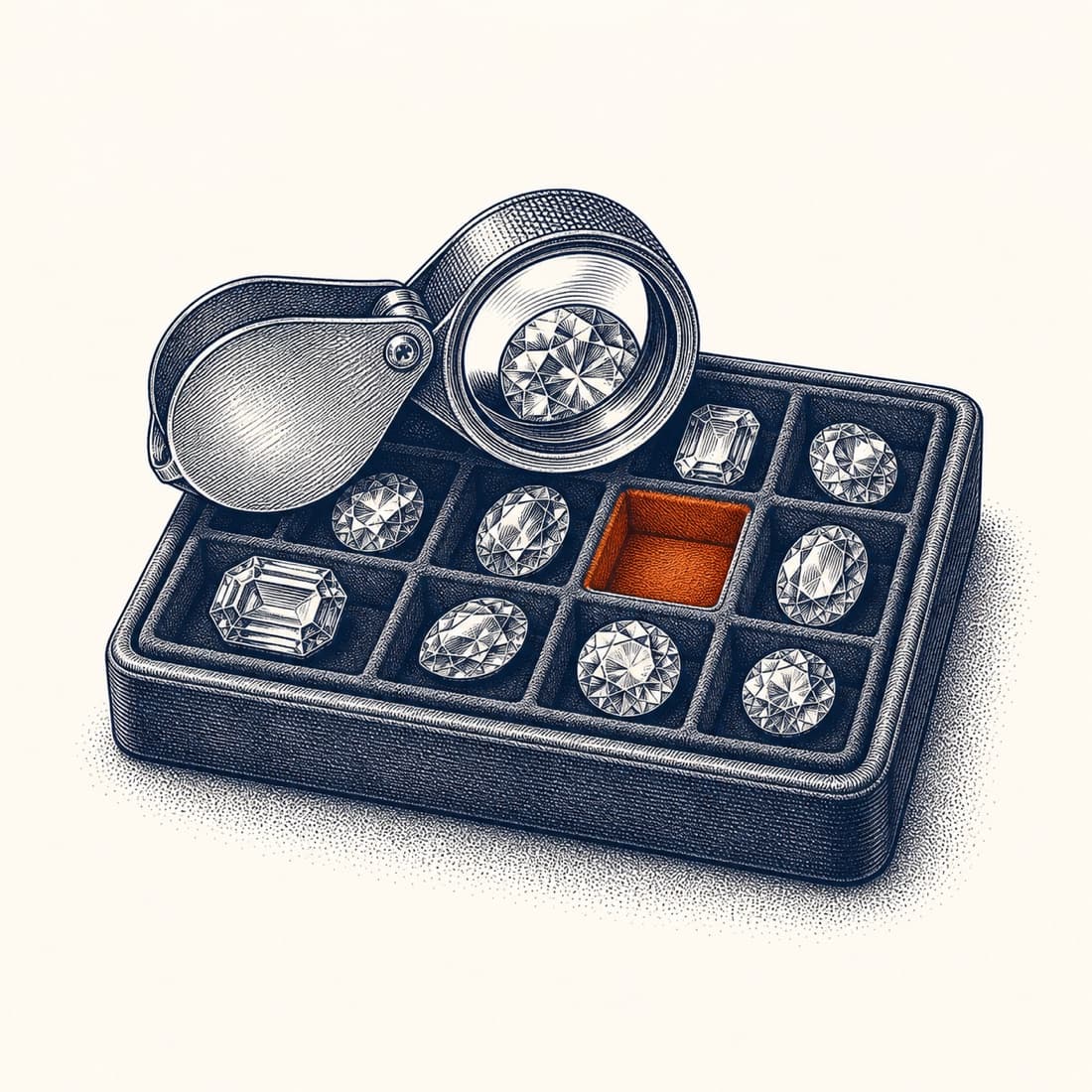
- Concept matrix: rows are studies, columns are concepts. An empty column or cell is a candidate gap.
- Stopping rule: saturation is reached when a new round of searching brings no new concept.
Summarising articles by author and year makes a gap harder to see; distributing the same studies across concept columns directly shows which concept was not measured in which study (Webster and Watson, 2002).
What are the systematic ways to see a gap?
Four routes are used together: future-work suggestions, review conclusions, sparse regions on the citation network, and conflicting answers to the same question. If all four point to the same gap, the gap is real; if only one does, the claim needs more evidence.
The first route is the cheapest: the limitations and future work sections at the end of articles are the field's own list of deficiencies. If the same suggestion repeats across several articles, it is no longer one author's wish but a shared deficiency of the field.
The second route is reviews: a field's review articles summarise the state of knowledge to date, and their conclusion sections often function directly as a list of gaps. It is worth noting how a review defines its own scope, because the area left out can also be a gap (Cooper, 1988).
The third route is the citation network: bibliometrics is the quantitative study of publications (Pritchard, 1969) and lets you see the field as a structure. Three measures are used: bibliographic coupling (bibliographic coupling, Kessler, 1963), co-citation analysis (co-citation analysis, Small, 1973), and co-word analysis (co-word analysis, Callon, Courtial and Laville, 1991); the resulting networks are split into clusters (Blondel et al., 2008; Traag, Waltman and van Eck, 2019). The sparse region between two dense clusters is the intersection of two literatures unaware of each other, and it often turns out to be a genuine gap.
The fourth route is contradiction: when two studies give opposite answers to the same question, first look for where the difference comes from (sample, measurement tool, analysis method, or context). If this difference fits an explainable pattern, you have a defined research question in hand.
How is a gap found turned into a research question?
A gap is narrowed down to a single answerable question; every concept in the question is tied to a measurable variable; then a design that can actually test those variables is chosen. When the question, variable and design are not aligned, the study does not close the gap even if it collects data (Creswell and Creswell, 2018).
Build the alignment in three steps.
- Question: reduce the gap to a single sentence question. The sentence must state who, what, where, and which relationship is being asked about.
- Variable: write down what each concept in the question corresponds to. A concept whose measurement is unclear cannot stay in the question.
- Design: the type of question determines the design. Relationship questions call for a quantitative design, meaning questions for a qualitative one, and questions asking for both call for a mixed design (Creswell and Creswell, 2018).
When you measure a concept with a single instrument, you cannot separate whether what you measured is the concept or the instrument itself. Measuring the same concept with different methods and testing whether the results converge, and whether different concepts diverge, reduces this risk (Campbell and Fiske, 1959). A study that sets out claiming a method gap and skips this check weakens its own claim.
One last check: write down the possible answers to your question in advance. If you cannot write down what would change depending on which answer comes out, the question is not yet a research question.
How is it proven that a gap genuinely exists?
By keeping a record of the search: the six items listed below. Without this record, the sentence "there is no study on this" cannot be verified; a reviewer audits this record, not the gap claim itself.
PRISMA 2020 is the accepted guideline for reporting systematic reviews (Page et al., 2021); for how the process should be run and risk of bias assessed, the Cochrane Handbook is the reference source (Higgins et al.). Even when a gap claim is not part of a systematic review, the reporting discipline of these two sources can still be applied.
- Database list: which sources were searched and why they were chosen.
- Query string: the keywords used, together with synonyms and logical operators, as written.
- Search date: because the literature grows every day, a result cannot be reproduced without a date.
- Inclusion and exclusion criteria: criteria such as language, year range, study type, sample are written down in advance.
- Screening record: how many records were found, how many were duplicates, how many were excluded at the title and abstract stage, how many at full text.
- Decision reasoning: why borderline studies were included or dropped is noted one by one.
The real purpose of this record is not to persuade a reviewer, it is to make the study reproducible. The established principle in computational science is clear: for a result to be verifiable, the data and the processing steps must be published together with the result (Peng, 2011). A literature search is also a process; a search whose record is not kept is an analysis that someone else cannot repeat.
A practical test: if asked to repeat the search from scratch six months later, could you find the same set? If the answer is no, the record is incomplete.
Which tools can carry out these steps?
All of the steps above can also be done by hand; what gets hard is that the search record, the citation network and the decision reasoning drift apart from each other. SciMind's products keep these steps on a single chain of record.


Related guides

References
- Blondel, V. D., Guillaume, J. L., Lambiotte, R. and Lefebvre, E. (2008). Fast unfolding of communities in large networks. Journal of Statistical Mechanics, P10008.
- Callon, M., Courtial, J. P. and Laville, F. (1991). Co-word analysis as a tool for describing the network of interactions. Scientometrics, 22(1), 155-205.
- Campbell, D. T. and Fiske, D. W. (1959). Convergent and discriminant validation by the multitrait-multimethod matrix. Psychological Bulletin, 56(2), 81-105.
- Cooper, H. M. (1988). Organizing knowledge syntheses: a taxonomy of literature reviews. Knowledge in Society, 1(1), 104-126.
- Creswell, J. W. and Creswell, J. D. (2018). Research Design: Qualitative, Quantitative, and Mixed Methods Approaches (5th ed.). SAGE.
- Higgins, J. P. T. et al. (Ed.). Cochrane Handbook for Systematic Reviews of Interventions. Cochrane.
- Kessler, M. M. (1963). Bibliographic coupling between scientific papers. American Documentation, 14(1), 10-25.
- Page, M. J. et al. (2021). The PRISMA 2020 statement: an updated guideline for reporting systematic reviews. BMJ, 372, n71.
- Peng, R. D. (2011). Reproducible research in computational science. Science, 334(6060), 1226-1227.
- Pritchard, A. (1969). Statistical bibliography or bibliometrics? Journal of Documentation, 25(4), 348-349.
- Small, H. (1973). Co-citation in the scientific literature. Journal of the American Society for Information Science, 24(4), 265-269.
- Traag, V. A., Waltman, L. and van Eck, N. J. (2019). From Louvain to Leiden: guaranteeing well-connected communities. Scientific Reports, 9, 5233.
- Webster, J. and Watson, R. T. (2002). Analyzing the past to prepare for the future: writing a literature review. MIS Quarterly, 26(2), xiii-xxiii.
Finding the gap is half the search.
The other half is keeping a record of the search. Write in if you would like to discuss a demo, a pilot deployment or an academic collaboration for your institution.