
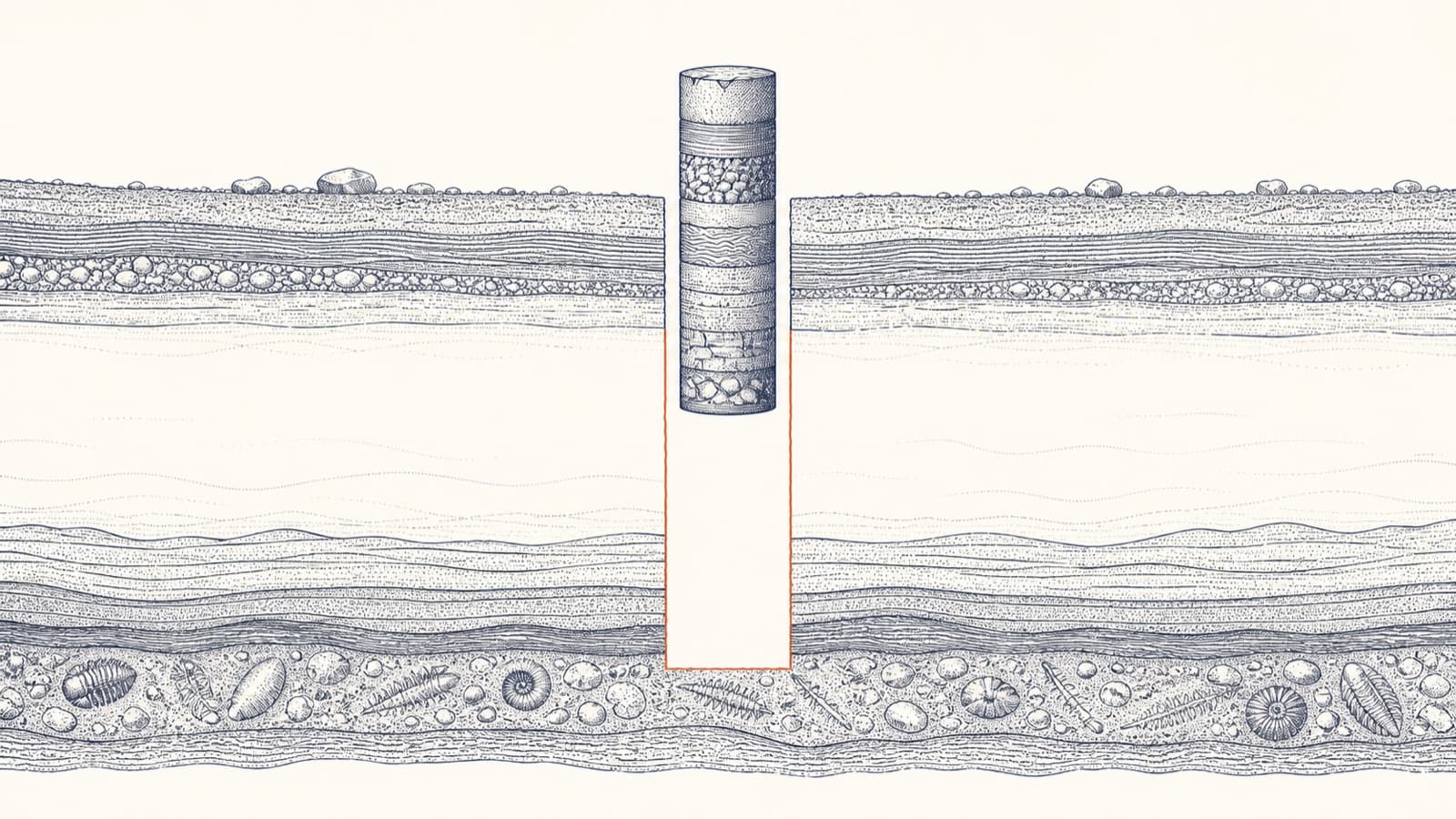
Read the literature, turn the gap into evidence.
Lacuna reads a field's literature through three engines and turns the gap left between clusters into a defensible research question. The application runs at lacunamind.app; this page is the product's institutional registry.
- analysis engines
- 3
- clustering
- Leiden
- languages
- 10
Why is a research gap hard to find?
Seeing what a field has studied is not hard; what is hard is seeing where nobody has stopped. A gap is not a record but the distance between records.
Telling a reviewer "this has not been studied" is not enough; you need to show what you left out and why.
In practice this work is split across three separate tools, and the three outputs get connected by hand; that connection is recorded nowhere.

Three engines in one workflow
Lacuna runs the same corpus through three readings and keeps them in one study; one engine uses another's output as input.
Bibliometric network analysis
Co citation and co word networks are built, and clusters are split with the Leiden algorithm; the picture shows which clusters never touch.
Thematic strategic mapping
Clusters are placed on axes of density and centrality; the map shows whether a theme has matured, is rising, or stayed on the margin.
Meta forest
Studies carrying numerical findings are brought together and their effect sizes compared on a common scale.
You bring the corpus; Lacuna does not impose its own data subscription. The interface works in ten languages.
The output of the three readings comes together in one editable draft; nobody carries findings over by hand when moving to writing.
Decision log and a sealed method

A literature review is made up of hundreds of small decisions that usually stay in the researcher's head; six months later nobody remembers them.
The decision log records each one with its reason; when a reviewer asks what you ruled out and why, the answer is in the report.
When the analysis closes, the method is sealed: thresholds, clustering settings and filters are frozen, and the same corpus gives the same result.
Who is it for?
Lacuna is field agnostic; the analysis is built on whatever field the corpus comes from. What they share is not the field but the shape of the question: a large literature, and where to look inside it.
- A doctoral student trying to narrow down a thesis topic
- A research team running a systematic review or meta analysis
- An academic who needs to show the state of a field before a grant application
- A research centre or library asked to map out a field
All four share the same expectation: being able to explain afterwards how the result was reached.
Institutional use
We provide institutional licences, pilot deployments and training support for universities, research centres and libraries.


Related guides

Sibling products


Let's talk about Lacuna at your institution.
Write in for a demo, an institutional licence, a pilot deployment or an academic collaboration; we provide proforma invoices and technical specification support for procurement.